Student Travel UK 2026: How to See the World on a Student Budget
Every flight comparison site, hotel platform, train app and travel card compared honestly; the ones worth using, the ones to avoid, and how to make the most of travel around your everyday studies without breaking the bank.

The Gradia Team
Gradia Editorial · Published 17 June 2026
13 min read
The Student Blog
Never miss out on student deals and any savings we can find you!
Get the latest on student deals and the savings we can find you. Never miss an article, no spam, unsubscribe anytime.
We’ll never share your email.

Prices checked October 2026.
Here’s an unhelpful fact: by your second year at university, most of you will have been on an Instagram-induced existential spiral after watching someone you vaguely knew at school post photos from Bali, Indonesia. The instinct is to write travel off as something you’ll do later, with proper money. Don’t. Your three years at uni come with longer holidays, no career pressure, and a reduction in responsibilities. The only thing missing is a plan that doesn’t involve emptying your overdraft.
What follows is the actually-useful version. I did thirteen countries on a student budget over my degree, as well as having numerous friends who embarked on study years abroad, and what I’ve learnt is that the difference between “I can’t afford it” and “I’m going” is mostly down to knowing which sites to use and when. This is the full landscape: every search engine, booking platform and travel app a student should know about, with honest notes on which I’d actually use.
Step 1: How to actually search for flights
The first mistake every student makes is going straight to one airline or booking site and starting their search there. The platform that finds you the cheapest flight is almost never the one you end up booking through, so always search broadly first, then book wherever’s cheapest.
Where to search first (start here)
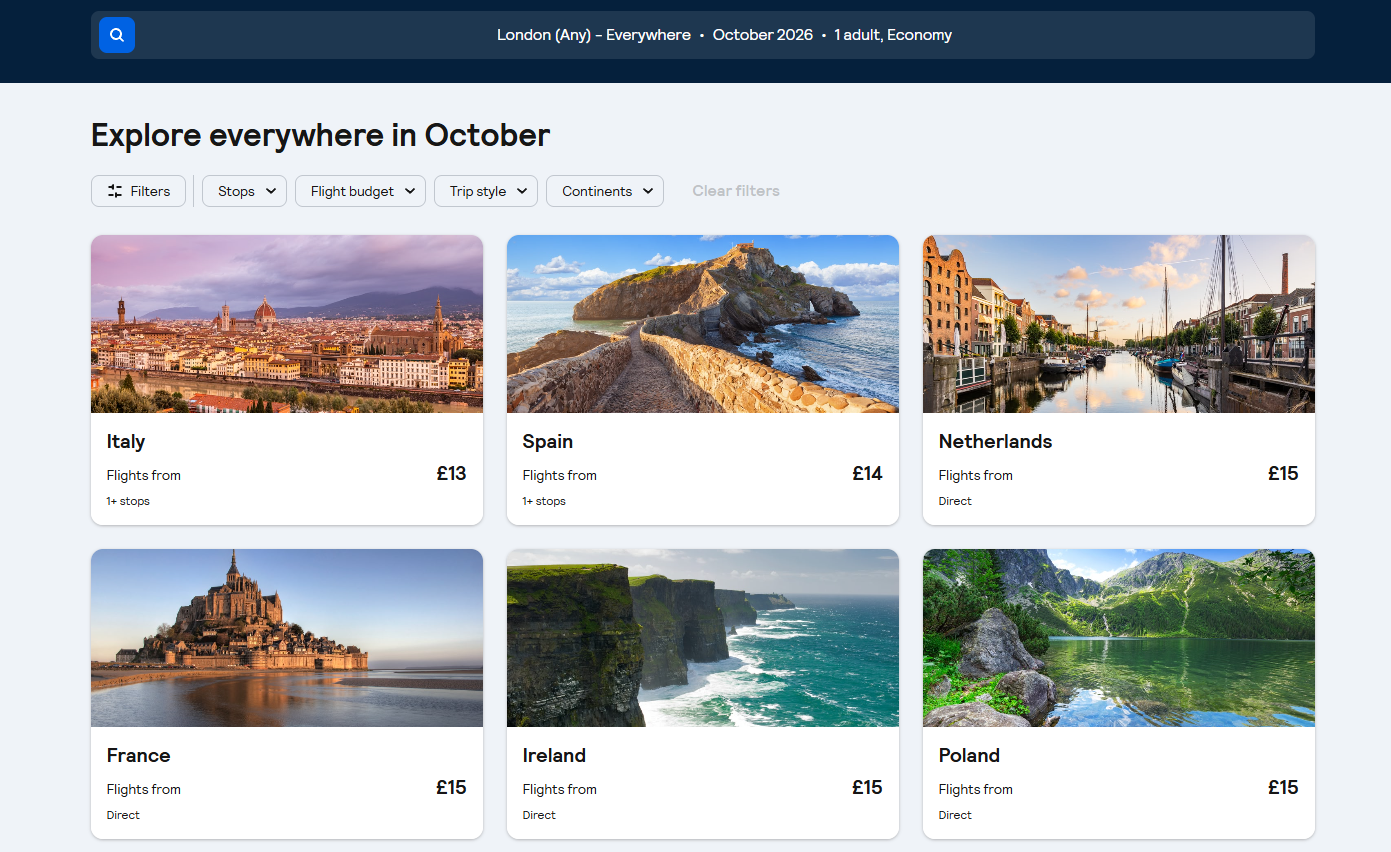
Skyscanner is the default UK student flight search tool for a reason. The “Everywhere” destination feature is genuinely brilliant: enter your home airport, set “Everywhere” as the destination and then set your dates as “flexible”, and it’ll show you where in the world it is cheap to fly from where you are. This is how almost every cheap trip I’ve taken started, Skyscanner told me where, not the other way around.
Google Flights is the best second opinion. It tracks price history better than anyone else, so it’ll tell you if a £180 flight to Lisbon is actually a good price for that route or whether it usually costs £90. The price-tracking alert system also actually works, set one up, then forget about it until your phone tells you the price has dropped.
Kayak is the useful third option, especially for multi-stop trips or open-jaw flights (fly into one city, out of another). Worth searching on if Skyscanner and Google Flights show similar prices, sometimes Kayak finds combinations the other two miss.
The cheapest trip is usually the one you weren’t planning. Book the deal, then find the reason.
A word on the budget airlines
You’ll almost certainly fly Ryanair, easyJet, Wizz Air or Jet2 at some point during your degree. A few honest notes:
- Ryanair has the cheapest headline prices and the most aggressive bag rules. The trick: bring only the small bag they let you carry on free. If your bag is even one centimetre too big, they can charge you around £70 to £75 at the gate. They aren’t joking.
- easyJet is the slightly nicer version of Ryanair, more generous on bags, more reliable departure times, slightly higher prices. Worth the £15–£30 premium if your trip is short and you don’t want the stress.
- Wizz Air is excellent for Eastern Europe, much better coverage of Poland, Hungary, Romania and the Balkans than the other two. Slightly newer fleet, fewer delays.
- Jet2 includes a small cabin bag for free and is genuinely friendlier service. Often slightly pricier headline but ends up cheaper once bags are factored in.
Step 2: Where to actually sleep
This is where the savings really happen. A flight saves you £50; the right accommodation saves you £200 over a week-long trip.
Hostels: Non-negotiable for a budget
Hostelworld is the platform every student should know. Hostels in 2026 are not what they were twenty years ago, most are clean, modern, female-only dorms are widely available, and a private room in a hostel is often cheaper than a hotel and far better socially if you’re travelling solo or as a pair. Filter by rating (anything 8.5+) and read the recent reviews, not the headlines. A €25-a-night hostel in Lisbon will be the best part of your trip.
Hotels, when you want walls
trivago UK
Best for: comparing the same hotel across every booking site
Once you’ve found a hotel you like, run it through trivago before you book. It pulls in prices from Booking.com, Agoda and the hotel’s own site, and shows you the cheapest for the exact same room. The price gap can be £20–£40 a night for the same bed. Five minutes of comparing pays for a meal out.
Compare on trivago→Affiliate link, Gradia may earn a commission
Hotels.com UK
Best for: stacking the loyalty programme over multiple trips
Hotels.com’s Rewards programme is genuinely worth signing up for if you’ll travel regularly over your degree. You earn nights as you book; after roughly every ten paid nights, you get one effectively free. Over three years of weekend trips, that’s two or three nights you don’t pay for. Sign up before your first booking so you don’t miss out on the night you’ve already had.
Browse Hotels.com→Affiliate link, Gradia may earn a commission
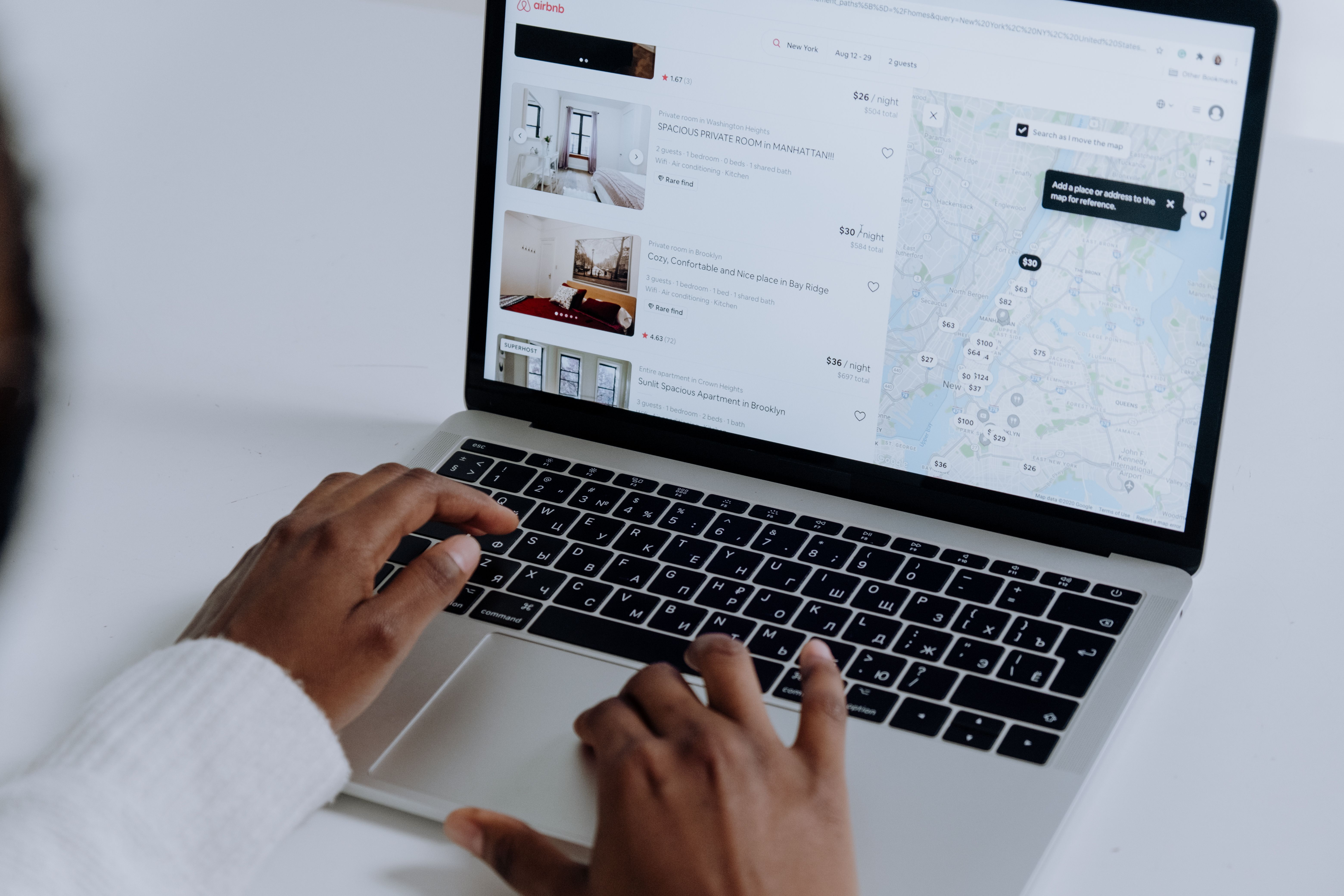
Other names to know: Booking.com has the deepest inventory of small independent hotels and B&Bs in Europe, sometimes the only place a small Portuguese guesthouse is listed. The “free cancellation” filter is essential. Airbnb is better for groups of 4+ on city breaks (apartments split between four people usually beat any hotel), but worse for solo or paired travel where the cleaning fees murder the per-night price.
Step 3: Getting around once you’re there
For under-25 students, in the UK the maths often points away from flying entirely. Train and coach travel inside the UK is dirt cheap with the right card, and Interrail is the genuine adventure most students underestimate. Especially in other countries, finding the cost effective mode of transport is incredibly important.
UK trains
If you don’t have a 16-25 Railcard, get one before you do literally anything else. £35 for a year, saves you a third off every train fare. It pays for itself in two trips home for the holidays. Trainline is the app most students use to actually book, slightly cleaner than National Rail’s own site and saves the Railcard discount applied automatically.
Europe by train
Eurostar from London to Paris/Brussels/Amsterdam is often cheaper than flying when you factor in airport transfers, and it dumps you in the centre of a major city in three hours. For a proper European trip, Interrail sells multi-country rail passes, a youth (under-28) pass for one month of unlimited European rail travel costs around €520 (roughly £450), which is genuinely doable as a summer trip and unbeatable for variety.
Coach travel (the cheapest option, full stop)
For UK travel on a real budget, National Express and Megabus regularly do £5 long-distance fares if you book weeks ahead. For Europe, FlixBus is the dominant low-cost coach network, slow but absurdly cheap, with overnight routes that double as accommodation.
Step 4: The airport parking hack nobody tells students about
Here’s a saving most students don’t even know exists. If you’re flying from Heathrow, Gatwick, Stansted or Luton, the on-airport parking is so eye-wateringly expensive that off-site parking with a shuttle bus is almost always cheaper, even after a week. And for short trips, you can pay less to park your car for a week off-airport than you’d pay for one day of on-airport “premium” parking.
Airparks
Best for: off-airport parking at every major UK airport
Airparks runs secure, off-airport car parks at every major UK airport with free shuttle buses to your terminal. The savings vs official airport parking are enormous (often 50–70%) and the actual experience is barely different. If you’re driving yourself (or splitting with friends and someone has a car), book here first.
Search Airparks→Affiliate link, Gradia may earn a commission
Bee Parking Heathrow
Best for: Heathrow-specific deals with quick transfers
If you’re flying out of Heathrow specifically, Bee Parking does dedicated Heathrow parking with shorter shuttle times than some of the bigger generic providers. Worth checking alongside Airparks; sometimes one’s cheaper than the other for the exact same week.
Book Bee Parking→Affiliate link, Gradia may earn a commission
Step 5: Travel money (the bit that quietly wrecks your budget)
Every UK high-street debit card charges you for using it abroad, usually a 2.75–2.99% non-sterling transaction fee on every purchase, plus a flat £1–£1.50 for cash withdrawals. Over a two-week trip, that’s £20–£60 of pure wasted money. The fix is to open one of the fintech accounts before you fly.
Monzo is the most popular student answer here. Free to open, instant notifications on every purchase, no fees on the first £200 of cash withdrawals every 30 days outside the EEA, and uses the Mastercard exchange rate (the best one). The instant-spend notifications also stop you doing the “oh god how much did I spend last night” thing.
Wise (formerly TransferWise) is what to use if you’re doing serious travel, a year abroad, a long backpacking trip, or sending money across borders. The multi-currency account lets you hold and spend in 40+ currencies at the real mid-market exchange rate. Best-in-class for the actual exchange rate; slightly more friction than Monzo for casual use.
Revolut is the third major option, solid weekday rates, weekend FX markup is the catch. Free plan is fine for most students; premium tiers aren’t worth it.
Whichever you choose: open it before the trip, transfer in what you’re planning to spend, and use it as your main travel card. Keep your normal UK debit card in the back of your wallet as a backup.
Step 6: Stay connected abroad without the £40 phone bill
The single most predictable way to ruin a trip is forgetting to sort your data before you fly. UK networks will happily charge you around £2.50 to £3 a day to use your normal allowance in Europe, and an insulting per-MB rate everywhere else. Don’t pay it.
BambooSIM
Best for: travel eSIMs that just work in dozens of countries
BambooSIM does travel data plans on eSIM, meaning if your phone is from the last few years, there’s no physical SIM swap; you just download a QR code and switch on the plan when you land. Plans are by country or region, last as long as your trip, and cost a fraction of UK roaming. For Europe trips especially, it’s a no-brainer.
Explore BambooSIM→Affiliate link, Gradia may earn a commission
Worth knowing: Airalo is the biggest established eSIM player and has similar plans, worth comparing for the specific country you’re going to before booking.
Step 7: The kit that survives a backpacking trip

Cotopaxi
Best for: a backpack that handles a year abroad and still looks good
Cotopaxi packs are made for travel, colourful, hard-wearing, often from repurposed materials, and built by a certified B Corp. A Cotopaxi Allpa duffel or Batac backpack will carry your kit through an interrail trip, a weekend in Edinburgh and three years of dragging a laptop to lectures. Spend once, use everywhere.
Shop Cotopaxi→Affiliate link, Gradia may earn a commission
For the genuine budget play, Decathlon remains unbeatable for travel basics, their Quechua and Forclaz lines do backpacks, sleeping bag liners, packing cubes and waterproofs at prices that read like typos. The kit isn’t going to last twenty years, but it’ll comfortably see you through a degree.
Ocean Bottle
Best for: the bottle that pays for itself in airports alone
Every airport, train station and museum has a water fountain. The £3 bottle of water you’d otherwise buy is a deeply silly purchase you can stop making. Ocean Bottle does sturdy, well-designed reusable bottles, and every one funds the collection of ocean-bound plastic. Take it through empty, fill it on the other side.
Get an Ocean Bottle→Affiliate link, Gradia may earn a commission
For a day-pack or laptop bag to take alongside your main one, Bagsmart is a good shout, proper padded organisers without the premium-luggage price tag.
Step 8: Don’t get hacked at the hostel
Genuine warning: hotel and hostel Wi-Fi is one of the least secure things you’ll ever connect to. Same for airport networks, café networks, and basically anywhere that doesn’t require a password unique to you. People do get banking credentials lifted from public Wi-Fi. It’s not rare.
NordVPN
Best for: safe browsing on every dodgy network & UK streaming abroad
A VPN encrypts your traffic so the network you’re on can’t see what you’re doing, which matters a lot in a Wetherspoons at Stansted at 4am. NordVPN is the most established option, runs on every device including your phone, and a useful bonus: it lets you access your usual UK streaming apps (BBC iPlayer, ITVX) when you’re abroad. Set it up before you fly, not in the airport.
Try NordVPN→Affiliate link, Gradia may earn a commission
If you can’t afford a paid VPN right now, ProtonVPN has a genuinely usable free tier, slower than NordVPN and only three countries to choose from, but it’ll protect you on public Wi-Fi, which is the main thing. Anything is better than nothing here.
Step 9: The longest flights need a plan
Long-haul on a budget means a no-frills airline, a middle seat and no in-flight entertainment unless you pay extra. Bring your own.
BookBeat
Best for: audiobooks you can pre-load before a long flight
BookBeat is a flexible audiobook subscription where you choose how many hours you want a month. Download a few before you fly, they work offline, and a 12-hour flight evaporates. Their library covers everything from crime novels to course-supportive reading. Cancel any time, so it’s easy to switch on for a big trip and pause otherwise.
Try BookBeat→Affiliate link, Gradia may earn a commission
Audible is the obvious alternative, bigger library, slightly more expensive, owned by Amazon. Spotify has a growing audiobook offering bundled with their Premium plan which is worth knowing about if you’ve already got Spotify.
If you’re heading somewhere sunny for summer, a pair of decent sandals you can actually walk in beats any flip-flop, Reef Sandals are properly built, last for years, and don’t fall apart in saltwater.
The booking-week rules I actually follow
- Tuesday afternoon tends to be the cheapest time to book flights from the UK. Wednesday morning is second-best. Sunday evenings are the most expensive.
- Book European flights 6–8 weeks ahead. Long-haul, 3–5 months. Last-minute deals are real but stressful.
- Always check Tuesday or Wednesday departure days, they’re £20–£100 cheaper than weekend flights for almost no inconvenience.
- Use incognito mode when searching. Even if sites don’t actually bump prices for repeat searches, it costs nothing.
- Set a price alert on Google Flights, then book through whichever platform is cheapest once it drops.
Where students actually go (and where to skip)
Smartest cheap trips from the UK
- Krakow / Budapest / Prague, under £50 return flights are routine; hostels under £25 a night.
- Lisbon / Porto, gentle weather year-round, low food prices, good public transport.
- Edinburgh / Cardiff / Belfast, don’t underestimate UK-internal trips with a Railcard; weekend in Edinburgh for £150 all-in is genuinely doable.
- Berlin / Amsterdam, more expensive than Eastern Europe but flights are dirt cheap and there’s plenty of free stuff to do.
Hidden expensive trips
- Iceland, flights look cheap, everything else costs three times what you think.
- Switzerland, beautiful, financially ruinous.
- The Greek islands in August, book in June and it’s reasonable. Book in August and it’s not.
- Anywhere coastal in southern Spain during half-term week, multiplied by three.

The Verdict
Make the most of your flexibility, book when the flights are cheap and make sure you use this time to do as much travelling as possible! As a student each holiday is a sketch and not a masterpiece. Luxury travel will come, but sharing a hostel with your mates making the most of Europe being on your doorstep is the envy of many. Find the cheap flights, book the cheap hostel, walk the city till you can’t walk anymore and most importantly make priceless memories.
One last thing
We want to grow and work with as many as these brands as possible to bring you catered offers and collate them in one place. Join Gradia today to be further rewarded for all things student life, and make sure to never miss out on any new features.
Go. Book that holiday, you’ll never look back.